
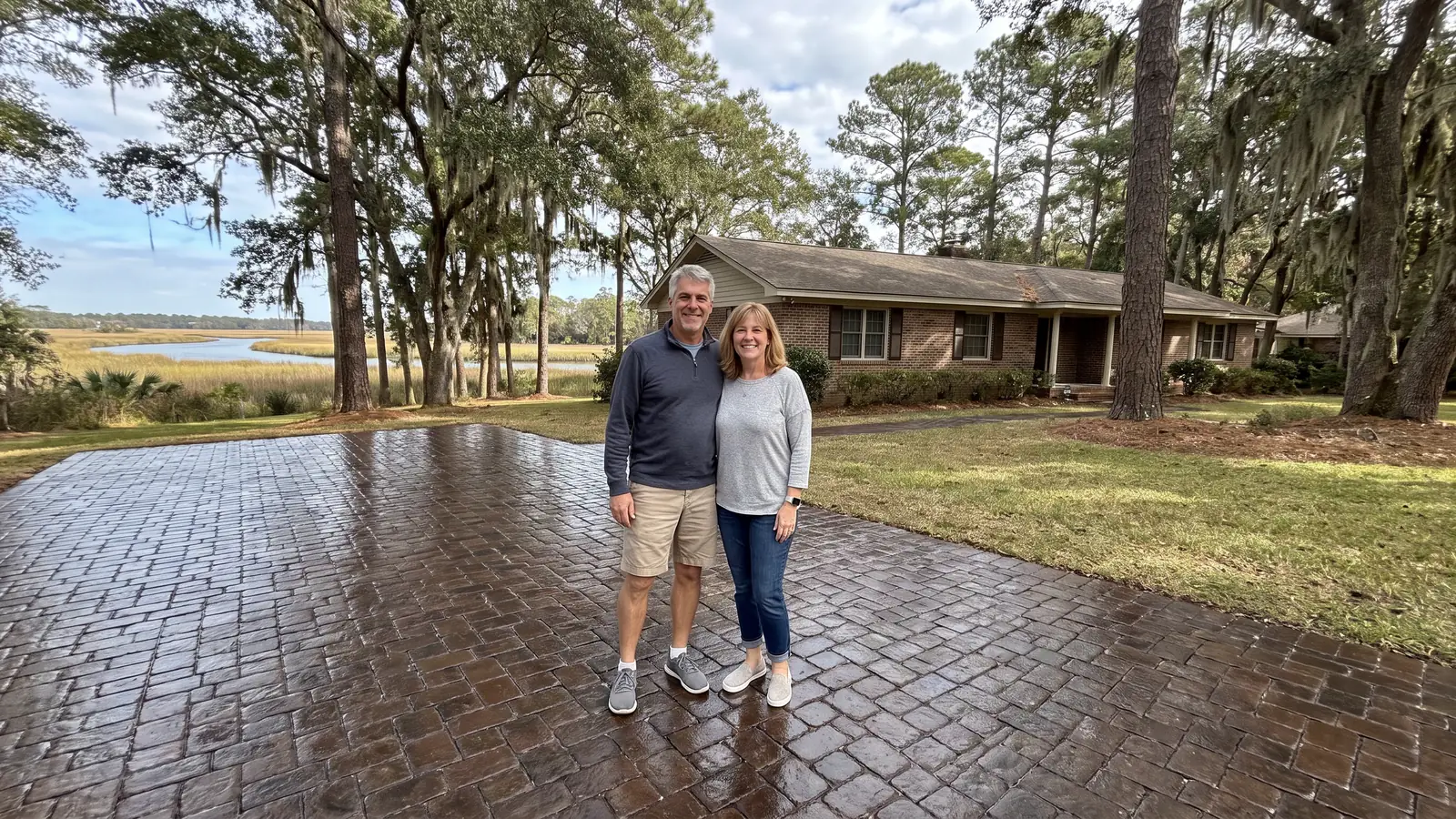
Rust, oil and oak stains lifted off your pavers
Paver Stain Removal in Fort Caroline, FL
Call (904) 637-8112 for a free estimate to treat stubborn stains on your Fort Caroline driveway, patio or pool deck.
- Brings out deeper paver color
- Fresh joint sand helps lock pavers in place
- Gives weeds less room to grow
- Makes the surface easier to keep clean
- Free estimate, no obligation
Request a Free Estimate
Free, no obligation.
Can someone treat the stains on my Fort Caroline pavers soon?
A local contractor treats paver stains in Fort Caroline, FL, and you hear back within 1 business day, and usually well before. The free estimate names each stain and what it would take to lift it. To start, call (904) 637-8112.
Orange streaks from the sprinklers, dark marks from the driveway, brown patches from the oaks and green or black growth along the shady edge all look alike from the street. Each one has a different cause and a different cure, which is why a guess with the wrong product can set the stain deeper. Point out your worst spots when you book your free estimate.
What kind of stain is on my pavers?
Naming the stain is the first job, because a treatment that lifts one kind can lock in another. The five below show up most around east Jacksonville homes. To have a contractor name yours, call (904) 637-8112.
1. Rust from irrigation
Iron in well water and reclaimed irrigation leaves orange streaks, according to Safe Touch and UF/IFAS.
2. Oil and grease
Car drips soak into the pores, and Pine Hall Brick says embedded oil resists a pressure washer.
3. Oak tannin and leaves
Safe Touch says live oak canopy leaves brown tannin on drives and walks, and Cambridge says leaf marks return yearly.
4. Black algae and mildew
Hydro Wash 360 says splash, shade and humidity feed dark growth that can show within weeks.
5. White efflorescence
Unilock says this white mineral film is harmless but can return where water keeps getting in.
How are paver stains removed without damaging the surface?
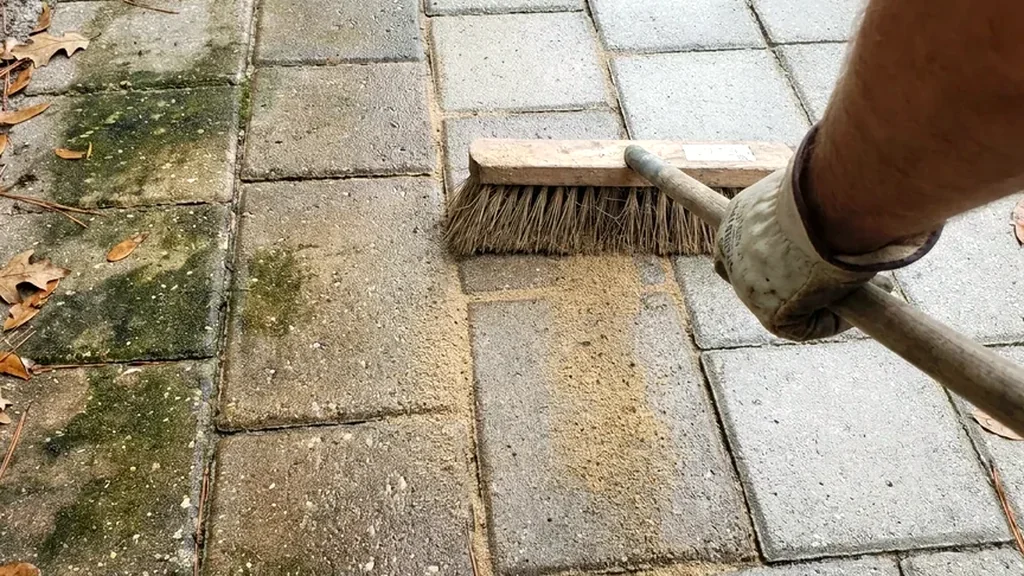
The method follows the stain. Cambridge Pavingstones finds the source of rust first, such as sprinklers, furniture or fertilizer, then uses a rust remover with a stiff brush. For oil that has soaked in, it uses an oil and grease remover left on 6 to 8 hours until it turns to powder. The maker promises no result and says to test a hidden paver first. To have that test done, book your free estimate.
Pressure is not the answer to every stain. Safe Touch says more pressure makes irrigation rust worse, and Pine Hall Brick says power washers are typically ineffective on embedded oil and can wash out joint sand. A contractor picks a surface cleaner and a treatment, then refills the joints if sand was lost. To talk through yours, call (904) 637-8112.
How does the paver stain removal process work, step by step?
A stain job has a clear order, and the sealer stays off until the surface is clean and dry. Here is how it usually goes. To book a visit, call (904) 637-8112.
1. Find the cause
The contractor looks at where each stain comes from, from sprinkler heads to oak limbs.
2. Test a hidden spot
A cleaner goes on one out-of-sight paver first, as manufacturers advise.
3. Treat each stain
Rust, oil, tannin and growth each get a product matched to them.
4. Wash gently
A surface cleaner rinses everything off without blowing out the joint sand.
5. Dry and refill
The surface dries, then missing sand goes back into the joints.
6. Seal if you want it
A coat keeps the next season of stains from settling in, and the contractor walks it with you.
Why do my pavers have orange streaks near the sprinklers?
The water is usually the reason. UF/IFAS says most Florida well water is high in iron and leaves rust deposits on whatever it touches, and Safe Touch says reclaimed irrigation does the same to sidewalks and stucco. Cleaning without fixing the source means the streaks return the next time the zones run. To have both looked at, book your free estimate.
UF/IFAS suggests testing the water and calling the County Extension office, and it lists softeners and oxidizing filters as treatment options. A paver contractor cannot fix a well, but can tell you whether the stain pattern points at a spray head. If you have a rust pattern, describe it when you call (904) 637-8112.
Will oak and leaf stains come back after cleaning?
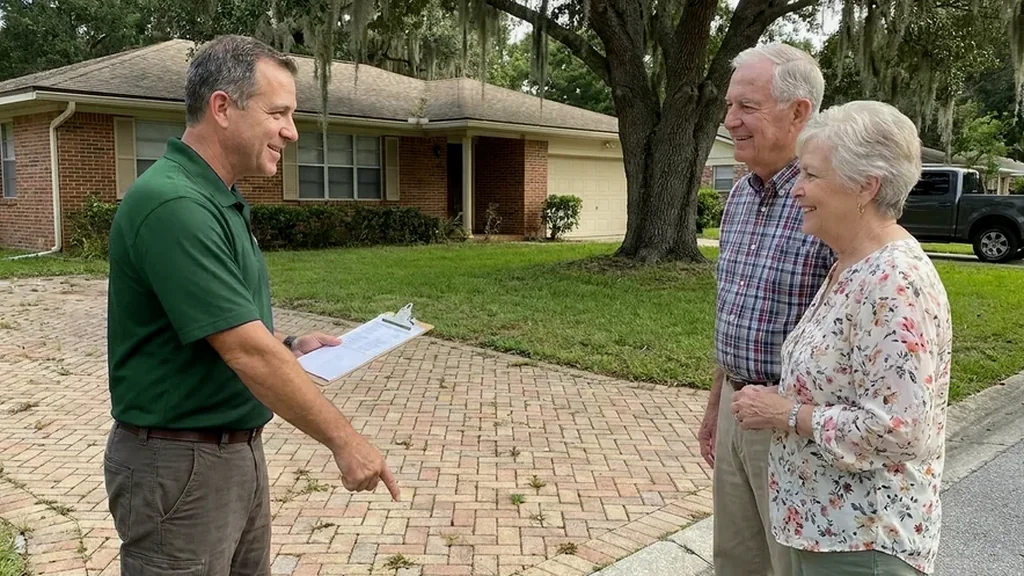
Some will. Cambridge Pavingstones says leaf stains recur every year, so the choice is between cleaning each season or changing the tree. Safe Touch names Arlington as one of the places where anything under a live oak canopy gets brown tannin, and says sealer on pavers keeps the next season from locking it in. To plan yearly upkeep, call (904) 637-8112.
Do black spots on my pool deck mean something is wrong?
They mean the deck stays wet and shaded. Hydro Wash 360 says Jacksonville humidity averages 70 percent or higher most of the year, and that splash, sprinkler runoff and screen enclosure shade keep a deck damp. Black algae has deep roots, and a quick scrub often leaves them behind. To ask about a lasting fix, book your free estimate.
What if my pavers are already sealed?
A sealed paver changes the cleaning plan. Cambridge Pavingstones warns that its rust remover will damage sealer, and Pine Hall Brick says to check with the cleaner's maker when pavers are sealed. A contractor can test a hidden spot and plan to reseal after treatment. If the old coat has failed, Hydro Wash 360 says it has to be stripped first. To talk about your coat, call (904) 637-8112.
What does paver stain removal cost in Fort Caroline?
No Jacksonville company publishes a per stain price, so the table uses the cleaning prices that are published. Safe Touch lists a driveway or concrete wash at $150 to $400, and Hydro Wash 360 lists routine pool deck cleaning at $200 to $600 for 400 to 1,000 square feet. A deck that went years uncleaned runs $500 to $800 for a deep clean. For your own number, book your free estimate.
If you want a coat to follow, clean, sand and seal runs $1.75 to $3.25 per square foot around Jacksonville. A 2026 guide says bids under $1 per square foot usually skip prep, which includes stain treatment. To compare a bid you hold with these figures, call (904) 637-8112.
| Stain job | Published figure | What it works out to |
|---|---|---|
| Driveway or concrete wash | $150 to $400 per job | $150 to $400 |
| Routine pool deck cleaning, 400 to 1,000 sq ft | $200 to $600 per visit | $200 to $600 |
| Pool deck that went years uncleaned | $500 to $800 for a deep clean | $500 to $800 |
| 300 sq ft patio cleaned, sanded and sealed after treatment | $1.75 to $3.25 per sq ft | $525 to $975 |
No Jacksonville company publishes a price for removing one kind of stain, so this table lists the cleaning prices that are published. Safe Touch and Hydro Wash 360 are the sources, read in November 2026. Deep rust or oil is priced after a contractor sees it, and your quote may differ.
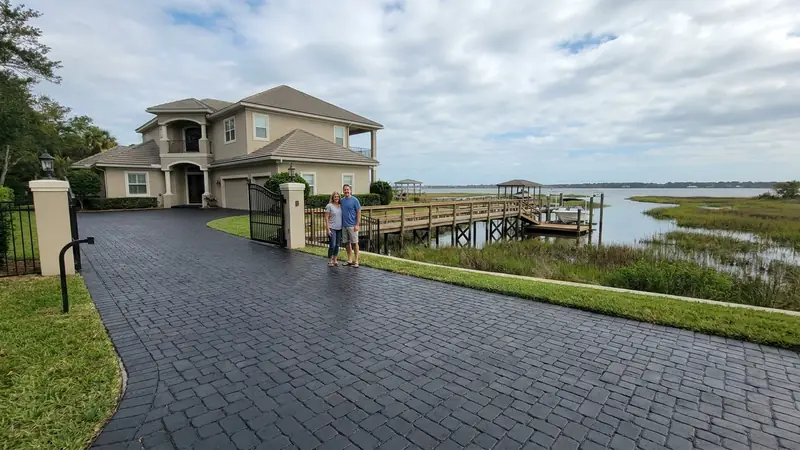
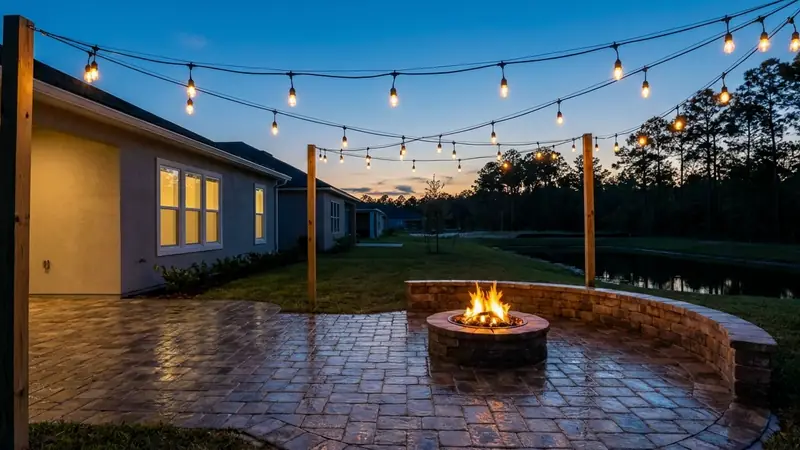
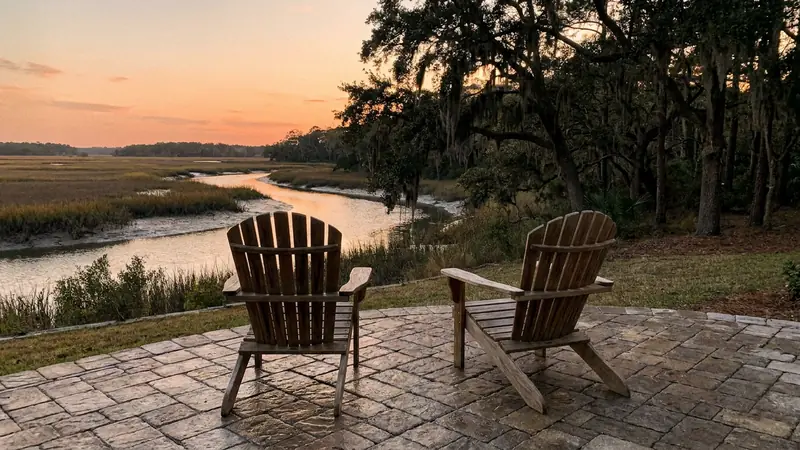
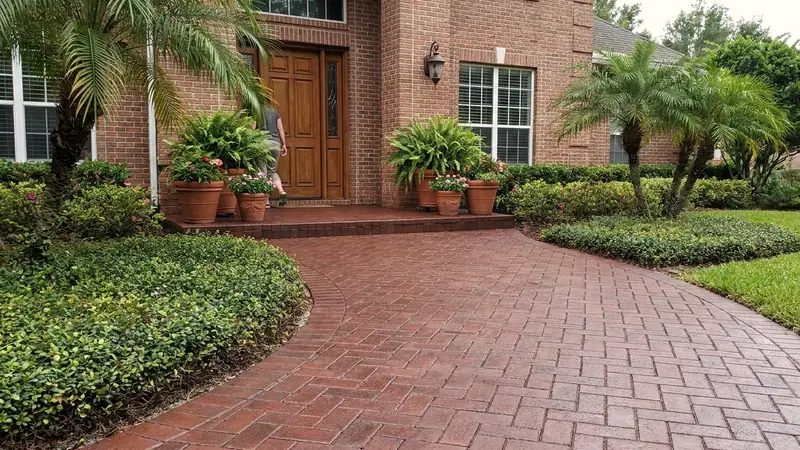
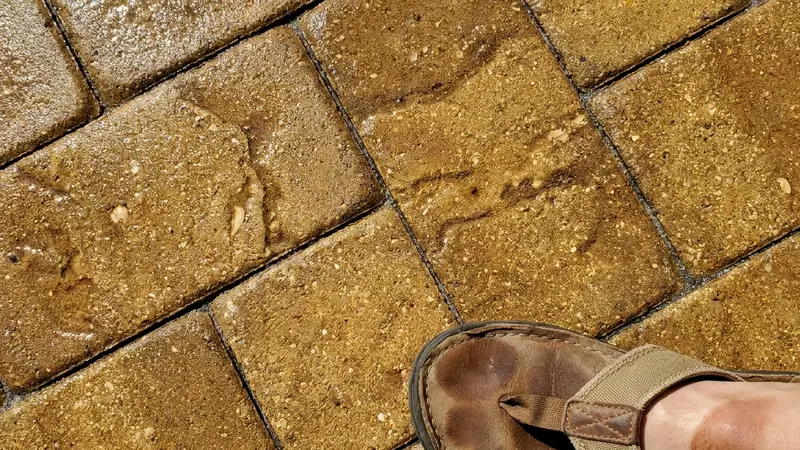
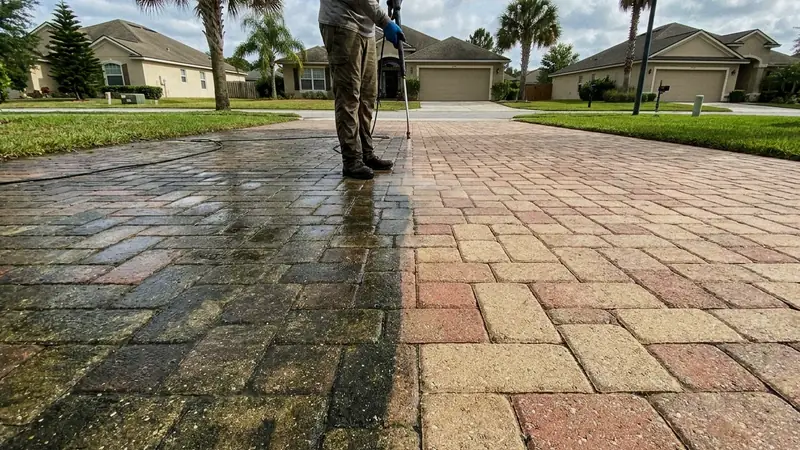
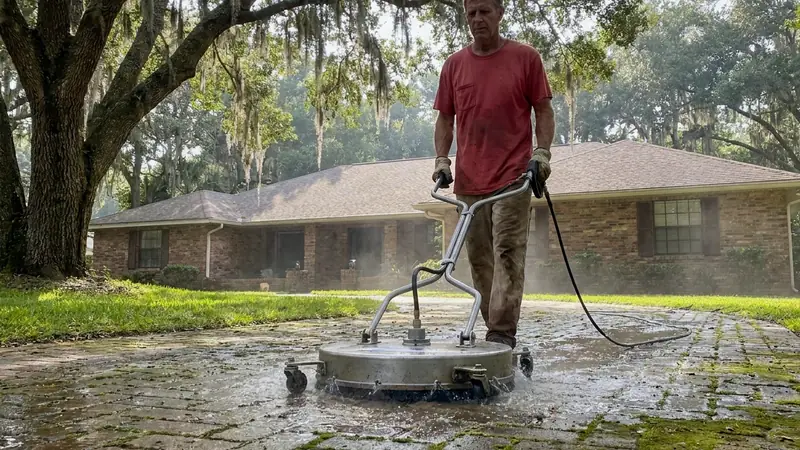
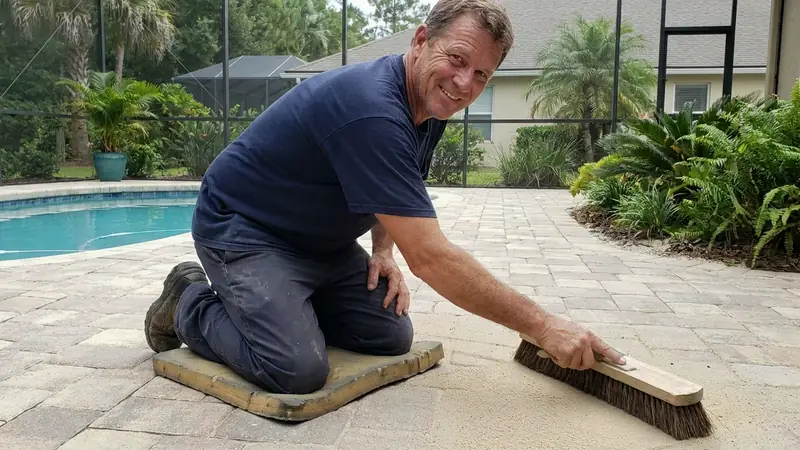
What do cleaned pavers look like around Fort Caroline?
Frequently Asked Questions
How do I remove oil stains from brick pavers?
Speed and the right product matter more than force. Pine Hall Brick says power washers are typically ineffective on embedded oil and grease and can wash out joint sand. Cambridge Pavingstones leaves an oil and grease remover on for 6 to 8 hours, until it turns to powder, and then the powder is swept away. A contractor brings that kind of product.
What is a good paver sealer for Florida?
For stain trouble, a sealer that fills the pores helps most. Hydro Wash 360 says a penetrating sealer fills the pores in pavers, and Safe Touch says sealer keeps the next season from locking in oak tannin. Ask which product is planned and how it handles oil, rust and growth.
Is there a pressure washing business in Florida that treats paver stains?
Yes, and Jacksonville has many of them, but paver stains call for more than pressure. A good one names the stain first, whether rust, oil, tannin or growth, and matches a treatment to each. Ask which products go on your pavers and how the sealer is protected.
Why is paver sealing so expensive?
A coat is cheap compared with the work before it. Stains have to be treated, the surface dried and the joints refilled, and sealing over dirt or damp pavers fails, Safe Touch says. A 2026 Jacksonville guide puts prep behind the gap between a $1 bid and a $3 bid.
How much should I pay for paver sealing?
Published Jacksonville prices run $1.75 to $3.25 per square foot to clean, sand and seal, and stain work is part of the cleaning step. Hard rust or deep oil can add time. A 2026 guide warns that bids under $1 per square foot usually skip prep.
Why do my Fort Caroline pavers have orange streaks from the sprinklers?
Iron is the usual cause. UF/IFAS says most Florida well water is high in iron and leaves rust deposits on whatever it touches. Safe Touch says iron in well water and reclaimed irrigation stains surfaces orange, and that more pressure makes it worse. The sprinkler source needs a look too, or the stain returns.
Will brown stains from live oaks come back after cleaning?
They can, but sealer slows them. Safe Touch says anything under a live oak canopy collects brown tannin stains on drives and walks, and that sealer on pavers keeps the next season from locking the stain in. Cambridge Pavingstones adds that leaf stains recur every year unless the tree changes.
Do black spots on pool pavers mean the sealer failed?
Not always. Hydro Wash 360 says black algae, mold and mildew thrive where splash, rain and sprinkler runoff keep decks wet, and that screen shade slows drying. Black algae has deep roots and can return within weeks in warm months. A penetrating sealer helps by filling the pores.
Can a rust remover be used on sealed pavers?
It can damage the coat. Cambridge Pavingstones says its rust remover will harm sealer, and Pine Hall Brick says to check with the cleaner's maker when pavers are sealed. A contractor can test a hidden paver first and plan on resealing that area afterward.
Which neighborhoods near Fort Caroline can ask about stain removal?
A contractor who covers the east side can reach every town below, and each has its own page. If yours is missing, call (904) 637-8112.
What other paver services can follow stain removal?
Stain work often leads into one of these jobs. Pick a guide, or call (904) 637-8112 to talk about your pavers.
Want the stains gone from your Fort Caroline pavers?
Send the short form or call, and a local contractor gets back to you within 1 business day, usually sooner.
Free, no obligation