
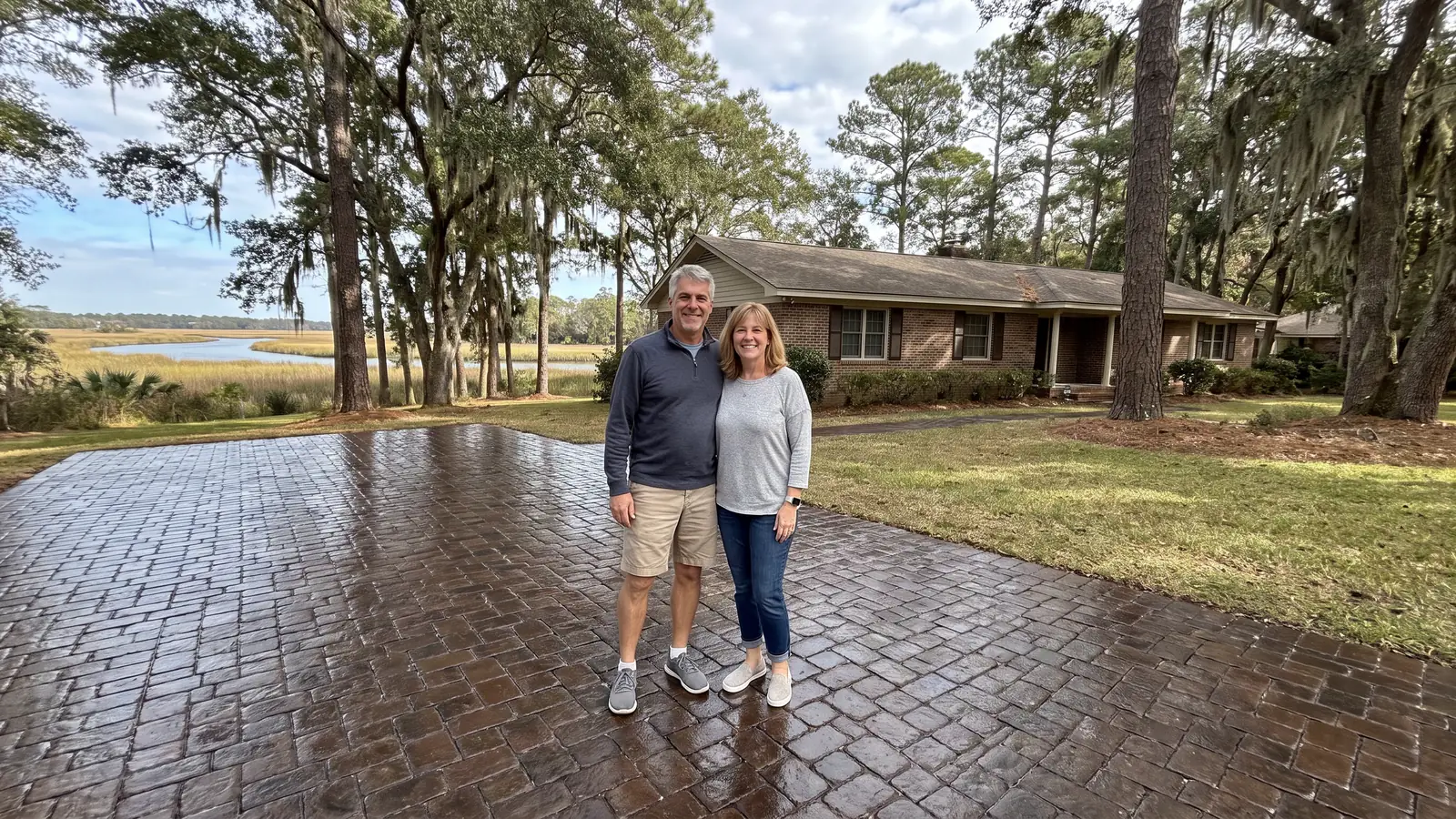
Paver sealing for Jacksonville Beach homes
Paver Sealing in Jacksonville Beach, FL
Two-thirds of Jacksonville Beach is water, so salt air reaches your pavers; call (904) 637-8112 for a free estimate.
- Brings out deeper paver color
- Fresh joint sand helps lock pavers in place
- Gives weeds less room to grow
- Makes the surface easier to keep clean
- Free estimate, no obligation
Request a Free Estimate
Free, no obligation.
Fast, careful paver sealing in Jacksonville Beach
Paver sealing in Jacksonville Beach is available for driveways, pool decks and walkways, and the estimate is free. A contractor from the area handles the wash, the new sand and the coat. If you call (904) 637-8112, expect to hear back within 1 business day, usually much sooner.
Picture the drive you have now. The color has gone chalky, the joints sit low, and a gray haze lingers where the sprinklers and the sea air reach. After a wash, fresh sand and a new coat, that same drive reads as one even color again. To describe yours, book your free estimate and add a line about the surface and the street.
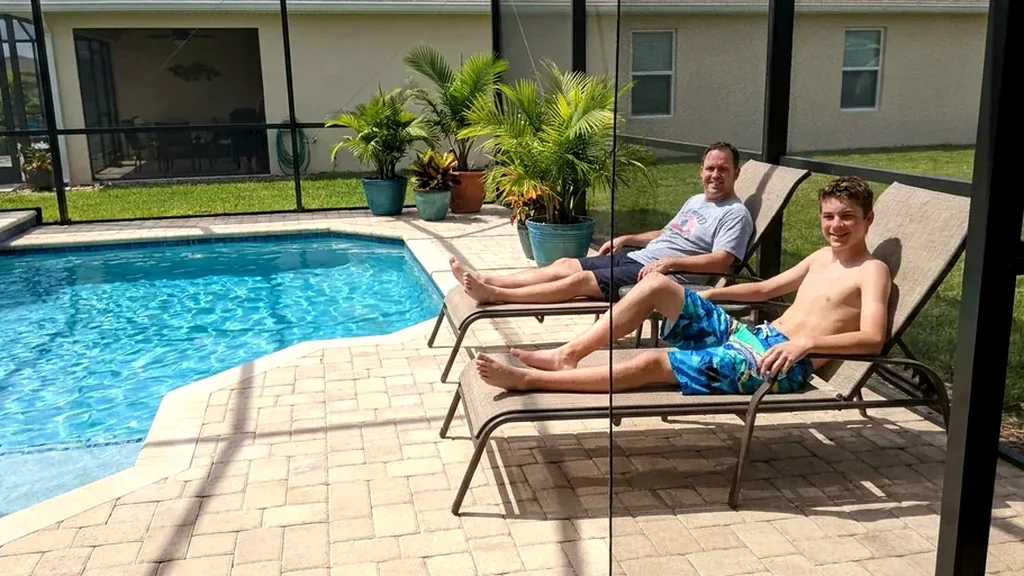
Why hire a local paver sealing contractor in Jacksonville Beach?
Jacksonville Beach is about two-thirds water by area, so a contractor who works here plans around salt, damp air and storm surge. To hear how that plays out on your street, book your free estimate.
A free look first
A contractor stops by, measures your Jacksonville Beach pavers and sends a number. Nothing is owed for the visit.
A range on the table
Published prices in the region run $1.75 to $3.25 per square foot for cleaning, sanding and sealing. Bring that when you compare bids.
Pick your sheen
Matte or wet look is your choice, and wet look shows scuffs sooner. Ask to hear both sides before you decide.
No strings
You set the date. You can say no after you see the quote.
Get Your Free Estimate in Jacksonville Beach
Tell us about your pavers in Jacksonville Beach.
Free, no obligation
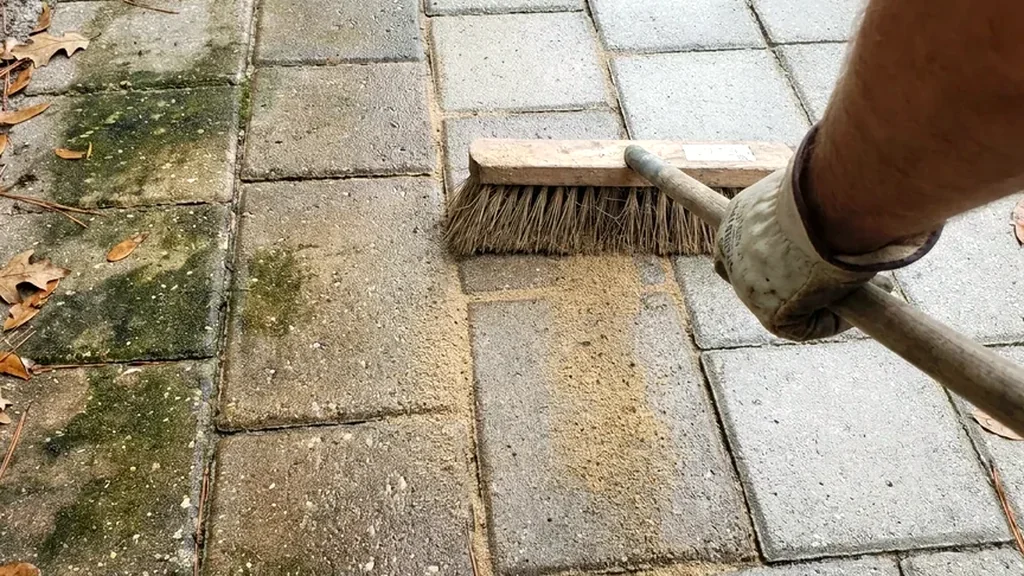
What paver problems show up most in Jacksonville Beach?
Salt that dries into a haze
A paver maker explains that salt travels through the air as tiny particles and crystallizes on surfaces as moisture dries. Jacksonville Beach is an oceanfront city with an elevation listed as zero feet, so that air reaches the lots. On unsealed pavers the film builds slowly and looks like fading. A wash removes it, which means the wash has to come before any coat. Pavers near the pool or a rinse-off spot may show it first. Pool decks, courtyards and front walks collect it too, so check every surface and not only the drive. Ask the contractor how often a light wash makes sense after sealing.
Water that comes from two sides
The city covers about 22 square miles, and nearly 15 of them are water. Hurricane Matthew pushed water across the dunes in 2016, reaching at least 2nd Street inland. A record 1.76 inches of rain on December 6 that year left part of First Avenue South underwater for hours. Pavers that have sat in water like that can hold a film of silt, and sealer would lock it in. Ask the contractor to check the low side of your lot first. Mention any year a storm reached your lot, since that tells the contractor how deep to wash. That is a lot of water for one small city, and it explains why drainage questions come up on almost every call.
A coat that turns white
A Jacksonville paver company says nearly every call about white sealer traces back to damp pavers or a coat laid on too thick. The same company notes that humid months stretch the drying time after a wash. Jacksonville Beach averages about 52 inches of rain a year, so waiting for a dry day is part of the job. A hazy coat is hard to fix, which means patience on the day saves a redo. Ask the contractor how many dry days the job needs after a rainy week. Thin, even coats dry cleaner than one heavy pass, which is why a careful contractor sprays and then back-rolls.
Slick spots by the pool
Pool decks and patios stay wet underfoot, so grip matters. A Jacksonville cost guide says penetrating sealers keep traction when wet, while film-forming sealers can trap moisture and create slip hazards. Wet look also shows scuffs sooner than matte. If you have a deck, say so when you call, so the finish can be picked with traction in mind. A quick walk across the deck in bare feet tells you how much grip it has. Ask the contractor to explain the difference between a film sealer and a penetrating one. Wet look can look glossy and rich beside a pool, but grip comes first.
Joint sand that tires push out
A Jacksonville paver company says weight and turning tires loosen joint sand and let pavers creep and settle. The same company says driveways collect oil drips, tire marks and rust from irrigation water. On a compact lot the car turns on the same few feet every trip. Washing removes what sand is left, so it is replaced before sealing. If your drive has gone wavy near the street, mention that on the first call. A short test of how the joints feel underfoot tells you whether the sand is already thin.
Do the old Pablo Beach blocks and the newer streets need different paver care?
Yes, a little, because Jacksonville Beach grew in layers. Sea Grove, near South Pablo Beach, has 174 homes built in the 1920s, while San Pablo Terrace off Penman Road has homes built from 1955 to 2005. Tell the contractor which layer you live in when you book your free estimate.
A paver on an older block may carry an unknown coat from an earlier owner. The reason is simple: a water-based product will not bond over a solvent-based one. Ocean Terrace, near South Beach Park, dates to the early 1980s and has a confirmed HOA, so ask your board about product rules first. Call (904) 637-8112 with your street name and the contractor can start from there.
Many homeowners here use city right-of-way beside their homes, and the city says most of that use needs a revocable encroachment permit. Pavers laid out to the curb can fall under that rule. The city may take that ground back at any time, so ask City Hall before you spend on it. When you are ready to price the part that is yours, book your free estimate.
What does paver sealing cost in Jacksonville Beach?
The regional range for the full job, wash through coat, is $1.75 to $3.25 a square foot. Where a Jacksonville Beach job lands depends on salt film, thin sand and any failed coat underneath. Stripping and resealing costs more than a fresh coat alone. To turn that range into a figure for your lot, book your free estimate.
Size changes the rate. A small patio runs higher per square foot than a long drive, since prep time does not shrink with the surface. Pool decks often get a penetrating sealer for grip. Call (904) 637-8112 and ask which of those items touch your Jacksonville Beach quote.
| Paved area | Typical example | Clean, sand and seal |
|---|---|---|
| 300 sq ft | Small patio or walkway | $525 to $975 |
| 600 sq ft | Two car driveway | $1,050 to $1,950 |
| 1,000 sq ft | Large driveway or pool deck | $1,750 to $3,250 |
| 1,500 sq ft | Driveway plus pool deck | $2,625 to $4,875 |
Math based on the $1.75 to $3.25 per square foot that Northeast Florida paver companies published as of November 2026. Your contractor sets the actual price after seeing the surface. Repairs, leveling and stripping failed sealer are usually extra.
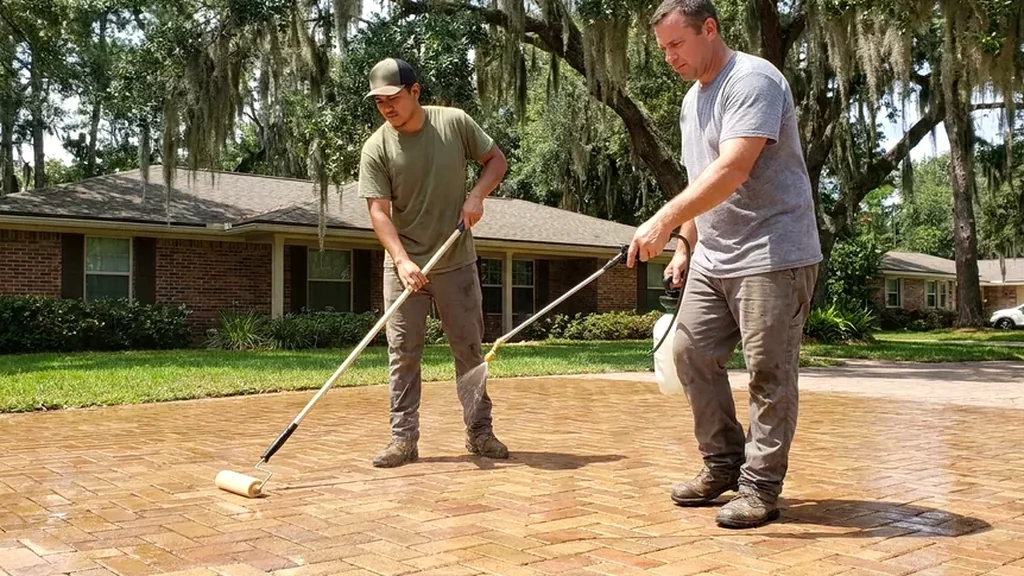
How does a paver sealing job work in Jacksonville Beach?
Walk the lot and check for old coats
The contractor walks your Jacksonville Beach pavers and looks for sunken or lifted spots, because a coat of sealer preserves any dip it goes over. Those areas get repaired first. If the surface was sealed before, the product matters, since water-based sealer cannot go over solvent-based sealer. Mention any past water on your lot, which changes how long the washing takes. A short walk around the property also shows where water leaves the pavers and where it stands. Ask the contractor to photograph any repair spots, so you can see exactly what changed.
Wash off the salt and grime
Cleaning lifts the salt film, tire marks, oil and any silt left by high water. Rust from irrigation spray gets treated at this stage too. Rinse water is aimed away from doors and garden beds. Washing also pulls out joint sand, which is why the next step exists. If the pavers meet a stone step or a painted wall, the contractor takes extra care there. Pavers that meet a stone step or a painted wall get a gentler touch.
Put the sand back in the joints
The joints are filled with fresh sand and the surface is swept clean. On a drive where tires turn, this is the step that keeps pavers from creeping. A full joint also gives weeds less room to start. If the sand has been low for a long time, expect this step to run longer than you would guess. Ask which sand color goes in, so the finished joints look even beside your pavers.
Sealing between beach showers
Sealer needs a dry surface. A Jacksonville company says drying time after cleaning is a real factor in humid months, and the city sees about 52 inches of rain a year. Sealing damp pavers is the usual cause of white haze. A careful contractor picks a clear stretch even when the date slides.
Apply the finish and keep off
The sealer goes on in the finish you chose, sprayed and then back-rolled so it reaches the joints. A Jacksonville company says feet are usually fine on it within a few hours, and cars should wait about a day. Companies commonly quote two to five years between coats, and salt air is a good reason to ask where your lot falls in that range. Keep sprinklers off until the coat has set. The contractor can tell you how many days to wait before the next wash or the next party. Plan where the cars will park before the day, since they must stay off for about a day.
Complete paver services in Jacksonville Beach
Think of the job as four moves: wash, new sand, dry time and sealer. Salt and grime come off first. The sand goes in next, and the coat goes on only when everything is dry. For the timing on your lot, call (904) 637-8112.
A drive takes tires, oil and street water, while a pool deck needs grip, so ask about a penetrating sealer there. Front walks and courtyards breathe the same salt air as the drive. Each one wears a little differently. Name your surfaces when you book your free estimate.
Two kinds of sealer exist, water-based and solvent-based, and what is already on your pavers decides which one can go on top. Film sealers come in matte and wet look. A penetrating sealer leaves the look nearly as it was. Call (904) 637-8112 to choose a finish for your Jacksonville Beach home.
Rain runs the calendar here. About 52 inches fall in a year, and storms can be short and hard. Hurricane season runs June 1 to November 30, peaking September 10. Sealer wants a dry surface, so a date can slide, and you can book your free estimate to find an open window.
Questions to ask before you hire
- Can you seal the driveway and the pool deck on the same visit?
- How warm and dry does it need to be before you will start sealing?
- Do I need to be home while you work, or can I leave the gate unlocked?
- Can you reset the pavers that tree roots have pushed up?
- Will the sealer make my pool deck slippery when it gets wet?
- If my HOA has to approve the work, can you give me the sealer's product sheet?
- Will rainwater still drain through the joints after the new sand and sealer go in?
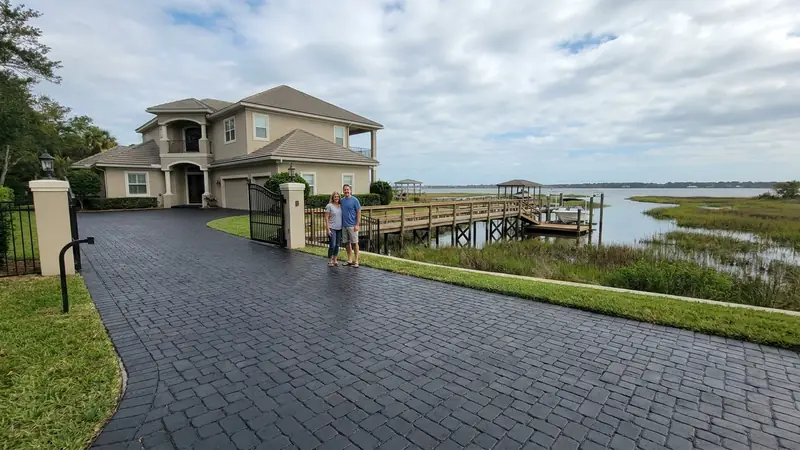
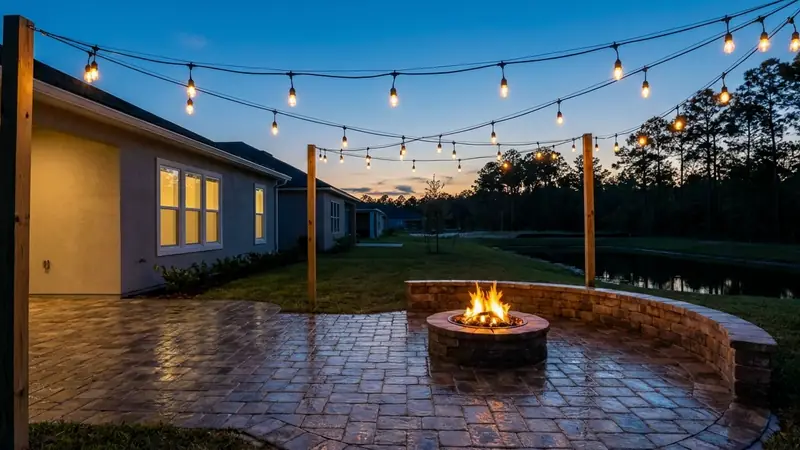
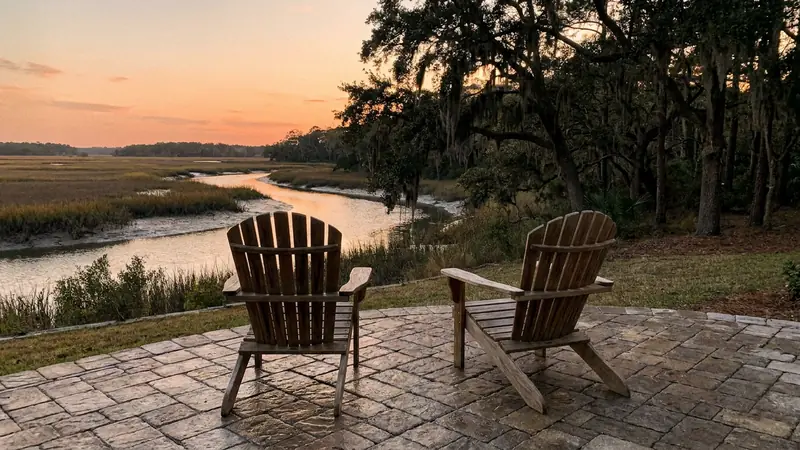
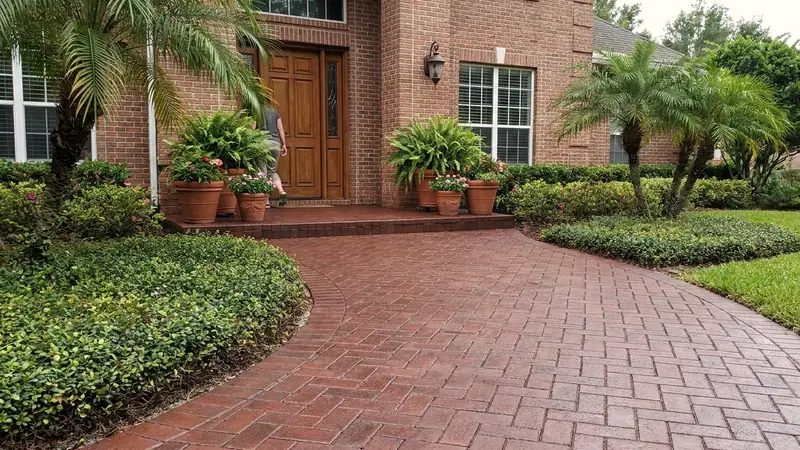
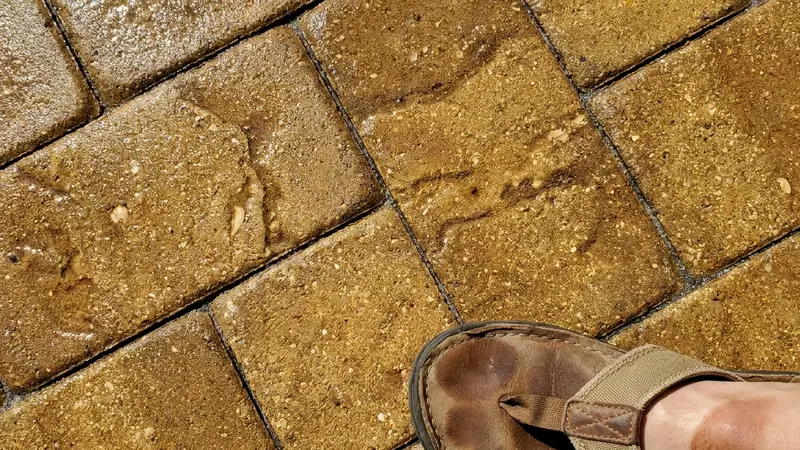
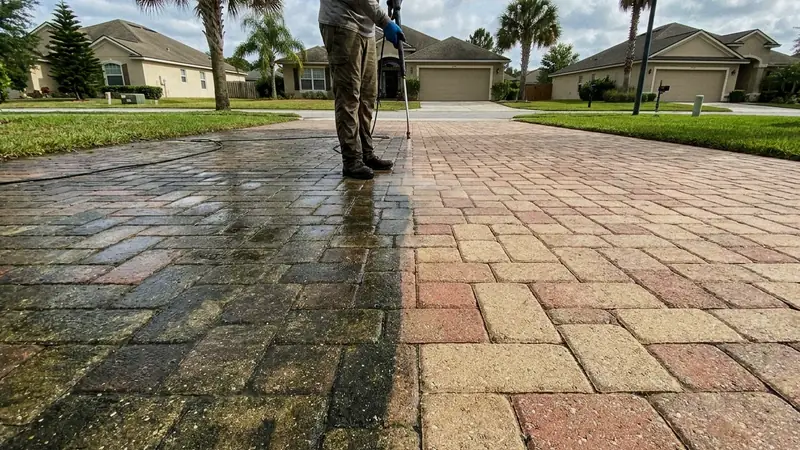
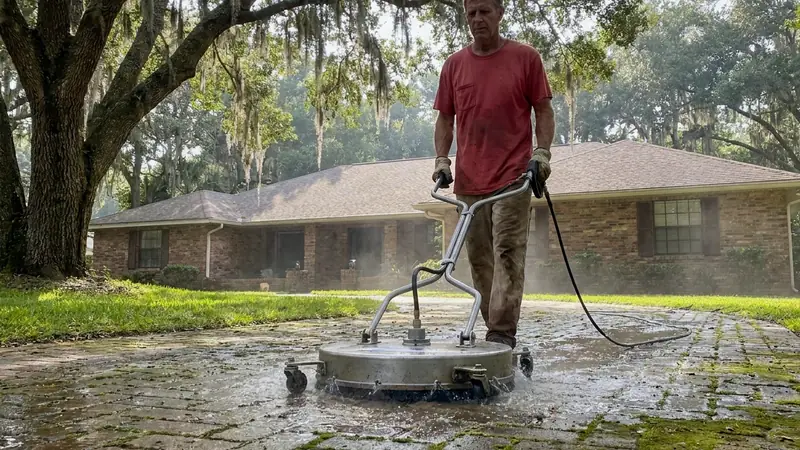
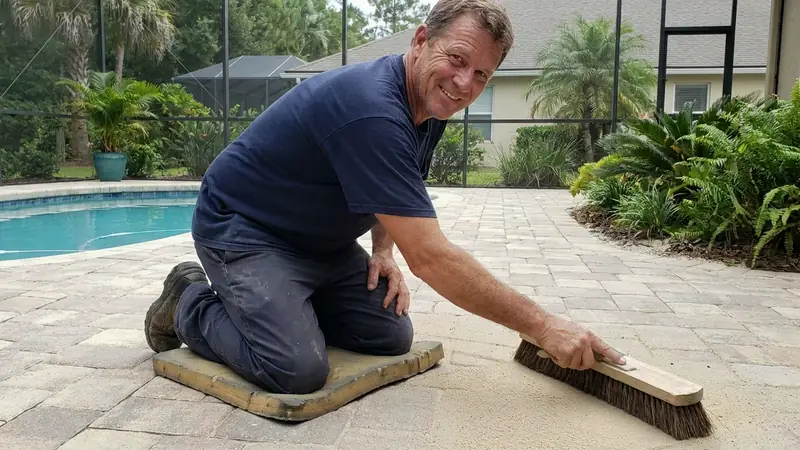
What do sealed pavers look like around Jacksonville Beach?
Why local matters in Jacksonville Beach
Ask a contractor who works Jacksonville Beach how close you are to the ocean, and whether the 2016 water reached your lot. The answers set how much washing comes first. Out-of-area crews may skip the question. Call (904) 637-8112 to reach a contractor who works these blocks.
Local knowledge shows up in the timing too. A morning that looks dry can turn when a summer storm arrives, so a contractor here watches the sky more than the calendar. Storms near the pier and the dunes can leave a drive wet for hours. If you would like to hear how that works, book your free estimate and mention your street.
The mix of homes matters as well. Jacksonville Beach has 1920s homes in Sea Grove, homes from 1955 to 2005 in San Pablo Terrace and an HOA in Ocean Terrace. Each calls for a slightly different plan. book your free estimate and note roughly when your house was built, with no obligation to hire anyone.
How did Ruby and Pablo Beach become Jacksonville Beach?
It happened in steps. William and Eleanor Scull built the first house in 1884 and named the settlement Ruby after their daughter, and it became Pablo Beach in 1886. The town was incorporated in 1907 and took the name Jacksonville Beach on June 15, 1925. If you live near the Beaches Museum on Beach Boulevard, book your free estimate.
Shad's Pier went up in 1922, the same year Jimmy Doolittle left Pablo Beach on a record flight to San Diego. The Volunteer Life Saving Corps began in 1912, and the lifeguard station at 2 Ocean Front North was finished in 1948. Hurricane Matthew damaged the pier in 2016, and it reopened on July 6, 2022. Near the Seawalk Pavilion or the pier, call (904) 637-8112 and name your street.
Not all of the local story is on land. In 1942 a U-boat torpedoed the tanker SS Gulf America off the beach, and the wreck now rests as a reef about 60 feet down. North of town, Hanna Park holds 447 acres of coastal hammock and a 1.5-mile beach. If you live anywhere between those two, book your free estimate and describe your pavers.
Frequently Asked Questions
How much does it cost to re-sand and seal pavers in Jacksonville Beach?
Expect $1.75 to $3.25 for every square foot washed, re-sanded and sealed, which is what Northeast Florida companies commonly publish. A salt film, thin joint sand or a failed old coat can push a Jacksonville Beach job higher. Have the quote list the total area, then divide to check it against that range. The free estimate turns that range into a figure for your lot.
Why is paver sealing so expensive in Jacksonville Beach?
Prep is where most of the money goes, more than the sealer itself. One Jacksonville company says it spends about 2 to 3 hours of prep for every hour of sealing, and another notes that prep time does not shrink on a small job. Washing, new sand and any repair all come before the coat.
How long does paver sealing last in Jacksonville Beach?
Plan on two to five years between coats, which is the span companies commonly quote. Salt air and daily tires are reasons to lean toward the shorter end on a Jacksonville Beach driveway. One Jacksonville company says water that beads means the coat is working, and water that soaks in means it is spent. Ask the contractor which end fits your lot, since shade and sun change the answer.
What do professionals use to seal pavers near the ocean?
Professionals use a water-based or a solvent-based sealer, and the coat already on the pavers decides which can go on. A Jacksonville paver company says it is typically sprayed on and then back-rolled so it reaches the joints. Ask for the product name and write it down for the next visit.
Does salt air change how often Jacksonville Beach pavers need sealing?
It can. A paver maker says salt crystallizes on surfaces as moisture evaporates and may wear lower-density materials over time. If your Jacksonville Beach lot gets steady sea air, ask the contractor whether to plan toward two years or five.
Can pavers be sealed after a storm floods a Jacksonville Beach driveway?
Yes, after a wash and a full dry-out. Water that went over the dunes or filled the street can leave silt, and sealer would trap it. The contractor washes first, replaces lost joint sand, and then waits for a dry stretch. Have the contractor start with the low end of the drive. In 2016 the water reached at least 2nd Street, so even lots away from the dunes can need a wash.
Do I need city approval for pavers beside my Jacksonville Beach home?
If they sit on city right-of-way, probably yes. The city says most use of that ground needs a revocable encroachment permit, and it may take the property back at any time. Ask City Hall about your lot before you pay for new work there. A short email or call to the city is usually enough. Even if the pavers are only a few feet past your fence line, a quick question to the city can save a redo.
Will sealer make a Jacksonville Beach pool deck slippery?
It can, depending on the sealer. A Jacksonville cost guide says penetrating sealers hold traction when wet, and that film-forming ones can trap moisture and make a slick surface. Tell the contractor about the deck so the product fits. A deck with a penetrating sealer is a common choice for grip.
Ready for a Free Estimate in Jacksonville Beach?
Call (904) 637-8112 and tell us about your pavers.
Free, no obligation